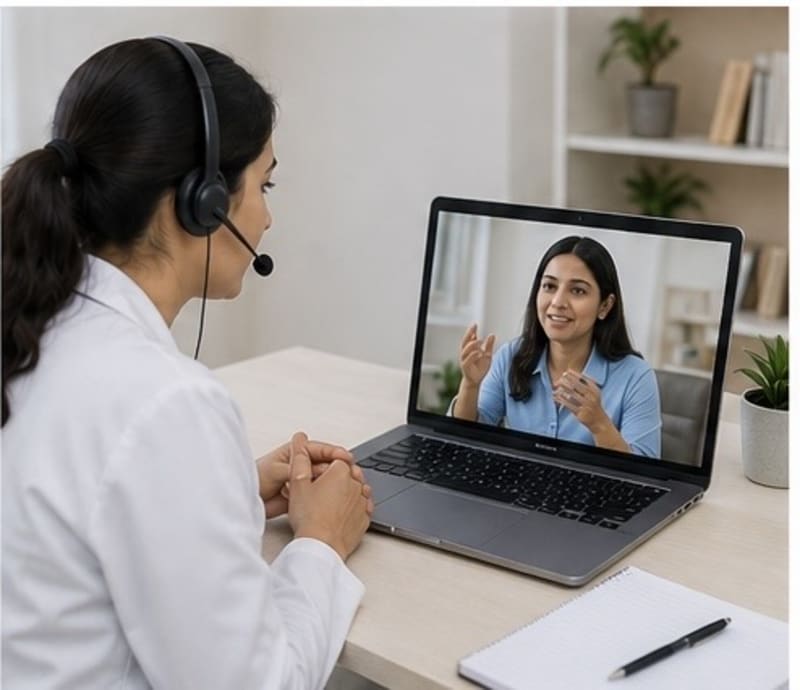
I want to be straightforward with you from the start: I offer online consultations at HealthNest Clinic, and I think they have genuine value for the right patients. But I also think the medical community — and patients — need to be more honest about what teleconsultation can and cannot do in a specialty like ENT.
This is not a promotional piece. It is my actual clinical perspective, shaped by years of in-person practice and the experience of conducting online consultations during and after the pandemic. If you are considering booking an online ENT appointment — here is what you should know before you do.
What ENT Diagnosis Actually Requires
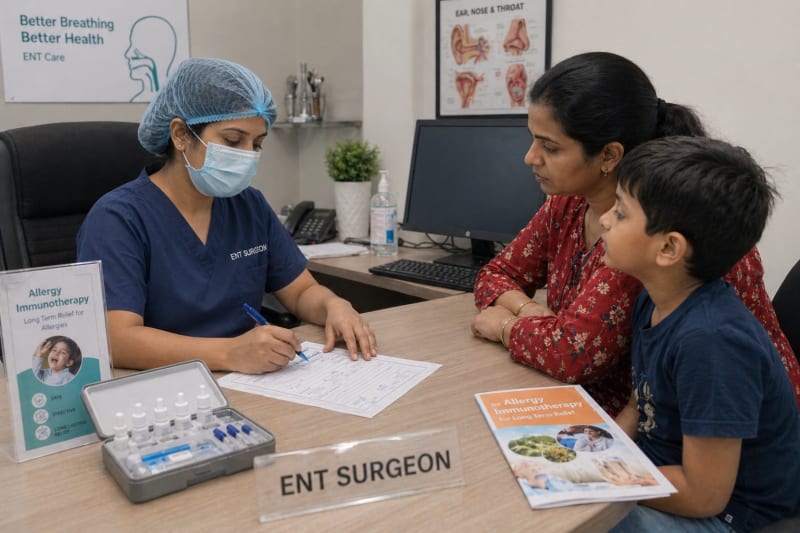
Before discussing teleconsultation, it helps to understand what ENT diagnosis involves. Unlike many medical specialties, ENT is heavily examination-dependent. A significant portion of what we assess — and much of what we treat — cannot be accessed through a screen.
A proper ENT examination typically includes:
- Otoscopy or microscopy to examine the ear canal and tympanic membrane
- Anterior rhinoscopy and nasal endoscopy to assess the nasal cavity, turbinates, septum, and post-nasal space
- Oropharyngeal examination with a headlight to assess the tonsils, uvula, posterior pharyngeal wall
- Flexible or rigid laryngoscopy to examine the larynx and vocal cords
- Neck palpation for lymph nodes, thyroid, and salivary glands
- Hearing tests — pure tone audiometry, tympanometry, tuning fork tests
Not one of these can be performed through a video call. This is simply the reality of the specialty — and any clinician who suggests otherwise is either uninformed or not being honest.
The Real Advantages of ENT Teleconsultation
With that context clearly stated, there are situations where an online consultation is genuinely useful — and in some cases, actually the better option.
Where teleconsultation works well in ENT
- Following up after a clinic visit — reviewing test results, adjusting medications, discussing reports
- Pre-consultation triage — helping you decide whether you need to come in urgently or can manage at home temporarily
- Prescription renewals for established patients with known diagnoses
- Second opinion on a diagnosis or management plan from another doctor
- Allergy and immunotherapy follow-ups — monitoring response, adjusting protocol
- Post-operative consultations — wound checks via video, medication queries, recovery guidance
- Patients with mobility limitations or chronic illness for whom travel is genuinely difficult
- Patients from outside Lucknow seeking a consultation before deciding to travel
- Parents with concerns about a child — initial discussion before deciding to bring them in
- Discussion of investigation results — CT scans, audiograms, allergy reports, blood tests
A specific example: A patient in Varanasi sends me their audiogram and tympanometry from a local clinic, along with their CT paranasal sinuses. I review everything on video, explain the findings in detail, and advise on next steps. That is a genuinely useful consultation. They may need to visit once — but they come knowing exactly what to expect.
The Genuine Limitations — Where Teleconsultation Falls Short
I am going to be direct here, because I think patients deserve honesty more than they deserve a sales pitch.
Where teleconsultation is genuinely limited in ENT
- New presentation of ear pain, hearing loss, or discharge — the ear cannot be examined remotely
- Any concern about the nose that requires endoscopy — polyps, structural issues, tumours cannot be excluded without examination
- Vertigo and dizziness — a proper vestibular assessment requires in-person manoeuvres, nystagmus assessment, and ideally VNG
- Voice changes or hoarseness — the larynx cannot be visualised without laryngoscopy
- Neck lumps or swellings — palpation is essential; a camera cannot tell us what we need to know
- Suspected foreign body — always in-person, always urgent
- Children under 5 with ear or throat symptoms — examination is simply not optional
- Any situation where the patient is acutely unwell, feverish, or in pain — needs to be seen
- Initial evaluation of hearing loss — audiometry cannot be replicated online
- Post-operative bleeding or complications — come in immediately, do not book an online slot
Please be cautious of any online ENT service that offers to diagnose and treat conditions like ear infections, hearing loss, vertigo, or throat lumps purely through a video call without any examination. A history alone is not sufficient for these diagnoses. You may receive a prescription that treats a guess — not a confirmed condition.
Who Should Book an Online Consultation at HealthNest
Here is my honest guidance on when to book online versus when to come in person:
Book online if you are:
- An established patient needing a follow-up or medication review
- Seeking a second opinion on existing reports or a previous diagnosis
- Located outside Lucknow and want to discuss whether to travel for in-person care
- Unsure whether your symptoms warrant an urgent visit — let us help you decide
- Managing a chronic condition (allergy, chronic sinusitis) that has been previously evaluated
- A patient on immunotherapy needing a protocol review
- A parent wanting to discuss a child's symptoms before committing to an appointment
Come in person if you have: new or worsening ear symptoms, any change in hearing, vertigo or balance problems, hoarseness lasting more than two weeks, a neck lump, nasal blockage that has not been previously investigated, or any acute, painful, or rapidly changing symptom. These require examination — always.
How an Online Consultation at HealthNest Works
For patients who are appropriate for teleconsultation, here is what to expect:
What happens in an online ENT consultation:
- You book through Eka Care — you will receive the consultation details by WhatsApp or email
- Please have any relevant reports, prescriptions, or previous investigations ready to share on screen
- The consultation is 15–20 minutes — focused and purposeful
- I take a detailed history, review any available investigations, and give you my clinical assessment
- If examination is needed, I will tell you clearly — and we will arrange an in-person appointment
- A prescription can be sent digitally if clinically appropriate
- You can ask all your questions — this is not a rushed 5-minute session
One thing I want to be clear about: if I conclude during an online consultation that you need an in-person examination, I will tell you that — even if it means the online appointment itself was inconclusive. A wrong diagnosis given confidently is far more harmful than an honest acknowledgement of the limits of remote assessment.
For follow-ups, second opinions, or consultations from outside Lucknow — book an online appointment with Dr. Tewari at HealthNest Clinic.
Book Online Appointment →Benefits for Patients — What Teleconsultation Does Well
Having been clear about the limitations, I want to acknowledge the genuine benefits — because they are real and they matter.
Access. For patients in smaller cities and towns around Lucknow — Kanpur, Varanasi, Ayodhya, Prayagraj — getting to a specialist clinic is a half-day effort. An online consultation for a follow-up or a discussion of reports eliminates that entirely.
Time. A focused 20-minute online session for a prescription renewal or a report discussion saves hours of travel, waiting, and disruption to work and family.
Continuity. For patients managing chronic conditions like allergic rhinitis, allergy immunotherapy, or chronic sinusitis, regular check-ins are important but do not always require physical examination. Teleconsultation makes these check-ins happen more consistently.
Anxiety reduction. Many patients — especially those with a new diagnosis or a complex report — benefit enormously from a calm, unhurried conversation before or after an in-person visit. An online appointment can provide that conversation in a setting that feels less clinical and more accessible.
Parental reassurance. Parents with concerns about a child often just need to talk through the symptoms with a specialist to decide how urgently to act. That conversation is perfectly suited to a video call.
My position: Teleconsultation is a useful tool — not a replacement for clinical medicine. Used appropriately, it extends access, saves time, and improves continuity of care. Used inappropriately, it creates a false sense of having been examined when you have not. The difference matters, and I try to be clear about it with every patient I see online.
Common questions
Can an ENT doctor diagnose everything online?
No. Teleconsultation is useful for history, triage, reports and follow-up, but ear, nose and throat diagnosis often needs examination or endoscopy.
When is an online ENT consultation useful?
It helps for follow-up, reviewing tests, discussing allergy plans, mild symptoms, medicine guidance and deciding whether a clinic visit is needed.
When should I not choose teleconsultation?
Do not delay in-person care for sudden hearing loss, severe ear pain, bleeding, breathing difficulty, foreign body, high fever, severe vertigo or neurological symptoms.
Can medicines be prescribed online?
Medicines can be advised when clinically appropriate, but some conditions need examination before safe treatment. The doctor will tell you if an in-person visit is necessary.
Is teleconsultation okay for children?
It can help parents decide the next step, but children with ear pain, fever, discharge, suspected foreign body or breathing symptoms usually need examination.
Will I still need to visit the clinic after an online consult?
Sometimes, yes. The aim of teleconsultation is not to avoid examination at all costs, but to guide you to the right level of care without unnecessary delay.